Create Jira Ticket
This idea cannot be sent to Jira.
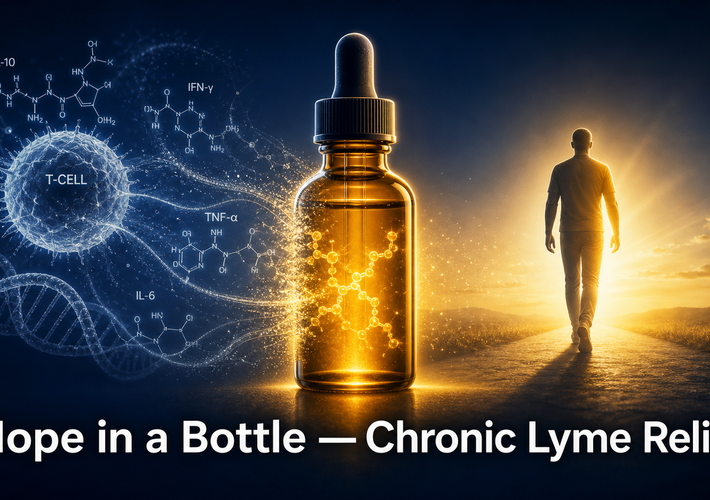
Hope in a Bottle: Chronic Lyme Relief

73 chronic Lyme patients: brain fog lifted, pain eased,
energy returned — in 14 days. The mechanism? Ultra-low-dose immune modulation targeting the cytokine overactivation that drives symptoms. Published science.
Real patients. Time to investigate. #ChronicLyme
Story Overview
Hundreds of thousands of Americans with Chronic Lyme disease have exhausted antibiotic options and have nowhere left to turn. This story follows a 14-day clinical observation of 73 confirmed Chronic Lyme patients who experienced statistically significant improvements in cognitive function, energy, pain, and quality of life — using an ultra-low-dose immune-modulating supplement. Independent French research from Institut Pasteur explains the mechanism. We are not selling a cure. We are calling on HHS and NIH to formally investigate thimerosal's immune-modulating properties as a potential treatment. Patients deserve that investigation.
Target Audience
Primary: Chronic Lyme disease patients who have completed antibiotic treatment and continue to suffer — and the estimated 476,000 Americans newly diagnosed with Lyme disease each year who are at risk of developing chronic symptoms.
Secondary: Integrative and primary care physicians treating Chronic Lyme patients who lack FDA-approved treatment options.
Policy audience: NIH NCATS, HHS LymeX leadership, FDA CDER drug repurposing program staff, and Congressional representatives withconstituents burdened by tick-borne illness.
Research community: Immunologists and clinical trialists looking for mechanistically plausible, commercially unencumbered candidates for Chronic Lyme treatment trials.
Priority
The single most important priority for Chronic Lyme patients is this: a funded, randomized, placebo-controlled clinical trial of ultra-low-dose immune modulation targeting the cytokine dysregulation that drives persistent symptoms.
No FDA-approved treatment exists for Chronic Lyme disease. Patients are told they have been treated and yet they cannot function. The cytokine science is established. The preliminary clinical data exists. What is missing is the government-funded trial that no pharmaceutical company will ever run on a generic compound. HHS and NIH must fill that gap — now.